Seen in Loch Lomond: Helen Hislop’s 22.5-Mile Open Water Swim
Aug 25,2026 | Maritonia
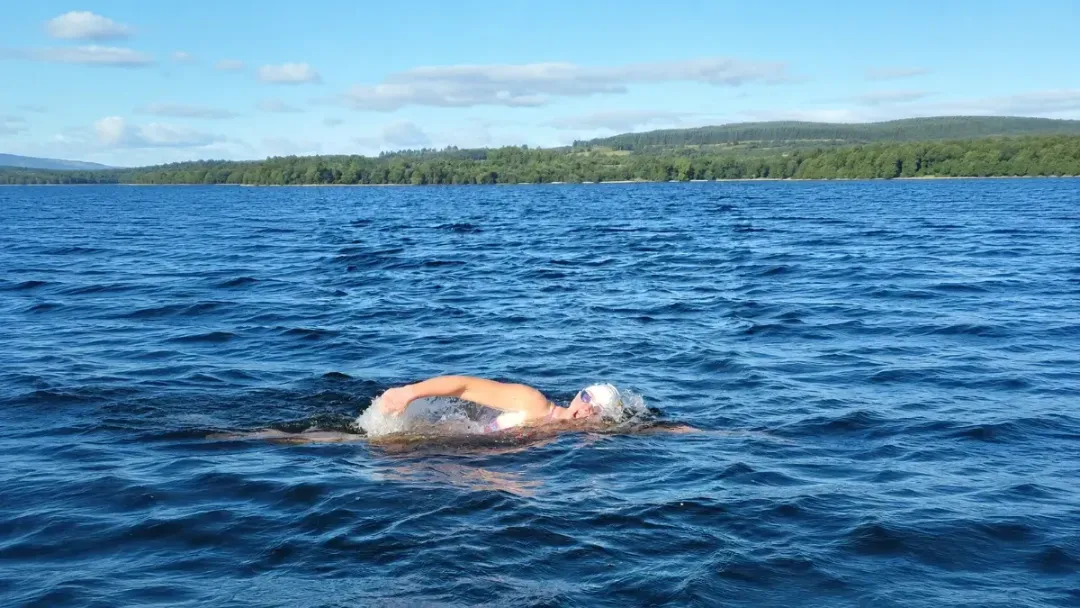
Helen Hislop during her Loch Lomond ultra-marathon swim in Scotland.
Photo credit: Qswim Adventure
Some swims are not only measured in distance or time.
They are measured in the hours of doubt before the start, the cold water against the skin, the wind that arrives when the body is already tired, the people waiting on the shore, and the quiet decision to keep moving when stopping would be easier.
For Helen Hislop, Loch Lomond was one of those swims.
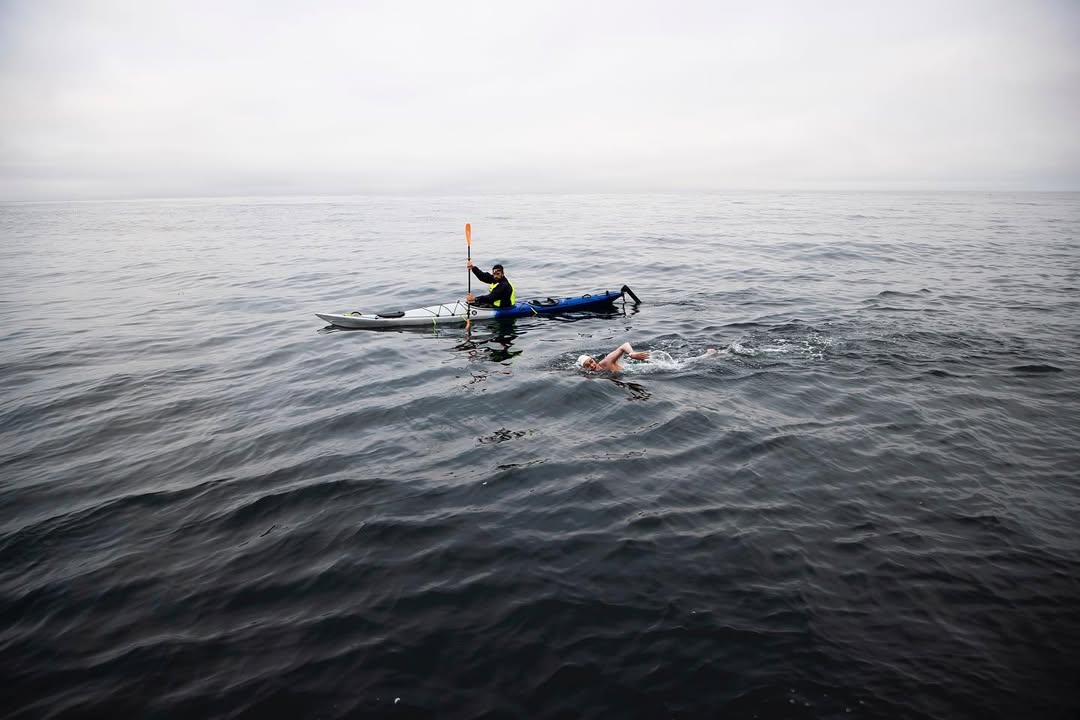
On Monday, 10 August 2026, Helen completed the iconic Loch Lomond ultra-marathon swim in Scotland, finishing the 22.5-mile route in 11 hours and 43 minutes.
Before the swim
Loch Lomond sits in the heart of Scotland, within the Trossachs National Park. It is the largest freshwater lake in Great Britain by surface area, stretching from Balloch in the south toward Ardlui in the north. Its waters are vast, dark, deep, and surrounded by mountains, villages, islands, and a landscape rich with history.
Beautiful, yes. But not easy.
For Helen, Loch Lomond was the second of three major swimming challenges in 2026. She had completed the Bristol Channel in June, then Loch Lomond in August, with a North Channel attempt planned for September. Each swim was part of a bigger journey, both physically and mentally.
“I needed a big swim, in cold water in preparation for my North Channel,” Helen wrote.
Cold water was one of her biggest concerns before the swim. Scottish lochs are known for their deep, dark, cold conditions, and even in the height of summer the water can be unforgiving. When Helen arrived a few days before the swim, Scotland greeted her with wind and lashing rain.
The weather in much of England had been unusually hot and dry. Scotland, in contrast, was still lush, green, and cold.
Helen managed a few acclimatisation dips before the swim, and the water felt much cooler than she had been used to. As experienced as she is, the nerves were still there.
“Even though I have been swimming in open water since 2019 and have accomplished some big swims, I still get very nervous beforehand,” she said. “Have I done enough preparation? Will I get through without injury? Is my feeding strategy correct? Will I cope with the conditions and is my mindset strong enough?”
These are the questions that often sit quietly behind endurance swimming. The public sees the finish. The swimmer carries the uncertainty long before the first stroke.
One less thing to think about
On the morning of the swim, the grey skies finally cleared. The water temperature was a more pleasant 16°C, and Helen began just after 7:00am.
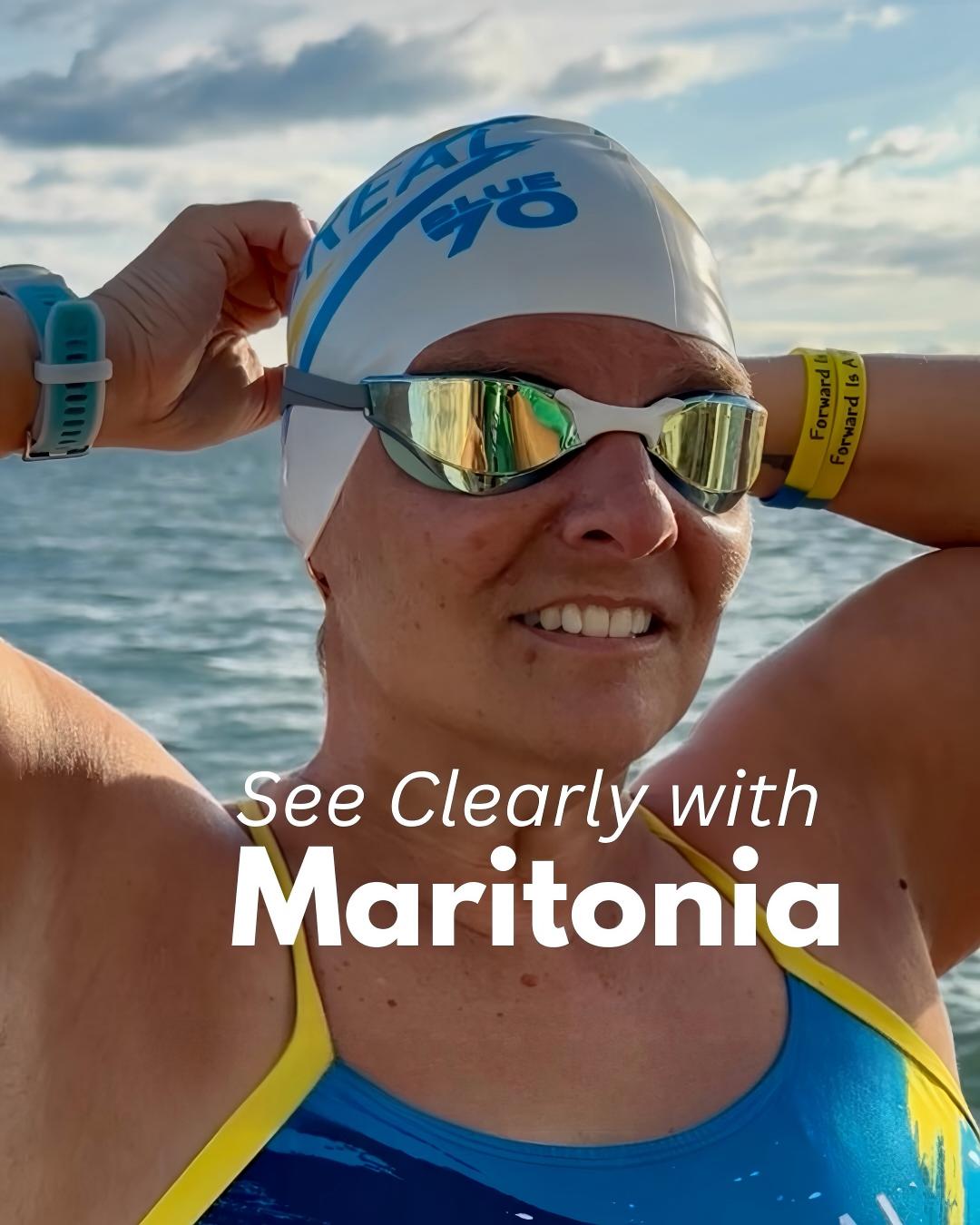
She wore a new costume and a pair of Maritonia HydroClear goggles she had won at The Big Bala Swim event in June.
But this was not her first experience with Maritonia. Helen had already been wearing Maritonia goggles for about a year, including during long open water swims. She also wore them when she successfully swam The Dal Riata Channel in a women’s world record, and during her World Record Three Lakes UK Challenge.
For Loch Lomond, they became one less thing to think about.
“I put my goggles on just after 7:00am and did not adjust or touch them for just over eleven and a half hours. No leaks, no fogging, crystal-clear vision the whole time, allowing me to focus fully on the swim and appreciate the outstanding vista.”
- Helen Hislop
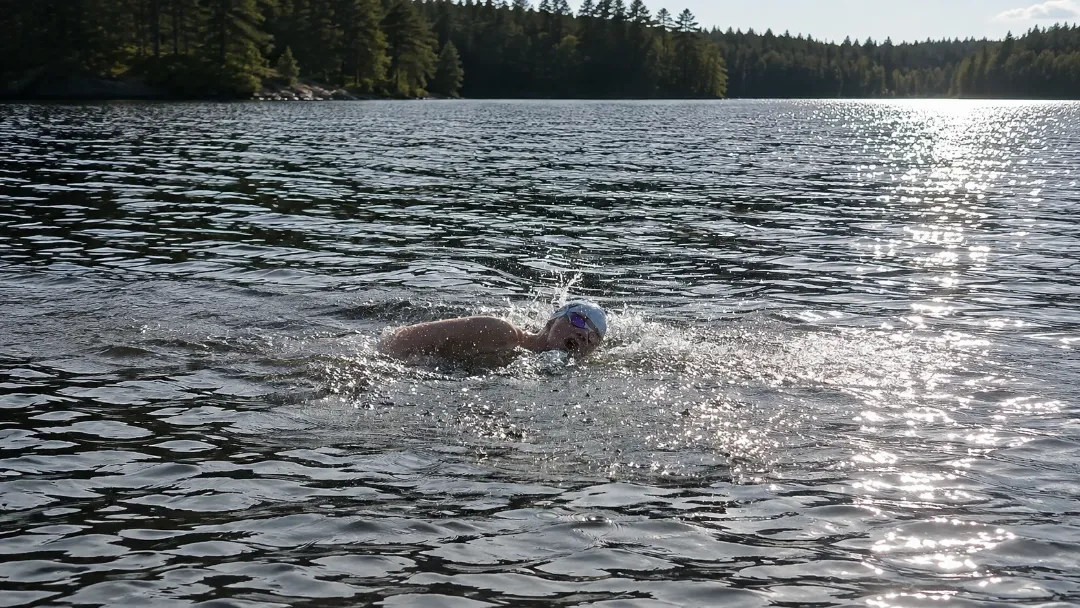
Open water rarely stays still. Light, wind, and changing conditions are all part of the swim.
Photo credit: Qswim Adventure
Eleven hours and forty-three minutes
For an ultra-marathon swimmer, that kind of reliability matters. Over more than eleven hours in open water, small problems can become large ones. A leaking seal, fogged vision, or constant adjustment can pull attention away from the rhythm of the swim.
Helen did not need to think about her goggles. So she could think about the water, the boat, the conditions, and the next stroke.
For much of the swim, she felt strong. Her stroke remained consistent, and she reached the halfway point in good time. At eight hours in, she was told she had 10 kilometres to go.
In another setting, that distance might have felt manageable. But in Loch Lomond, after eight hours of swimming, nothing was guaranteed.
Headwind arrived in pockets. Her pace dropped. She began drifting left and found it hard to stay with the boat. At times, she felt as if she was being pushed sideways.
A 22.5-mile swim is always relentless toward the end. Helen’s arms and legs grew heavy. Her body began to hurt. Still, she pushed on.
At her final feed, she was told she had 15 minutes to go.
It turned into the longest 15 minutes of the day.
The buildings on shore looked close, but the end seemed to move away from her. It took almost three quarters of an hour to reach dry land. By then, she was exhausted. When she finally put her feet down, she could barely stand. She hobbled across the stones and climbed onto the shore.
Her husband and daughter were there, cheering her in.
It was done.
“The relief and sense of accomplishment was immense,” Helen said. “Another demanding swim ticked off successfully.”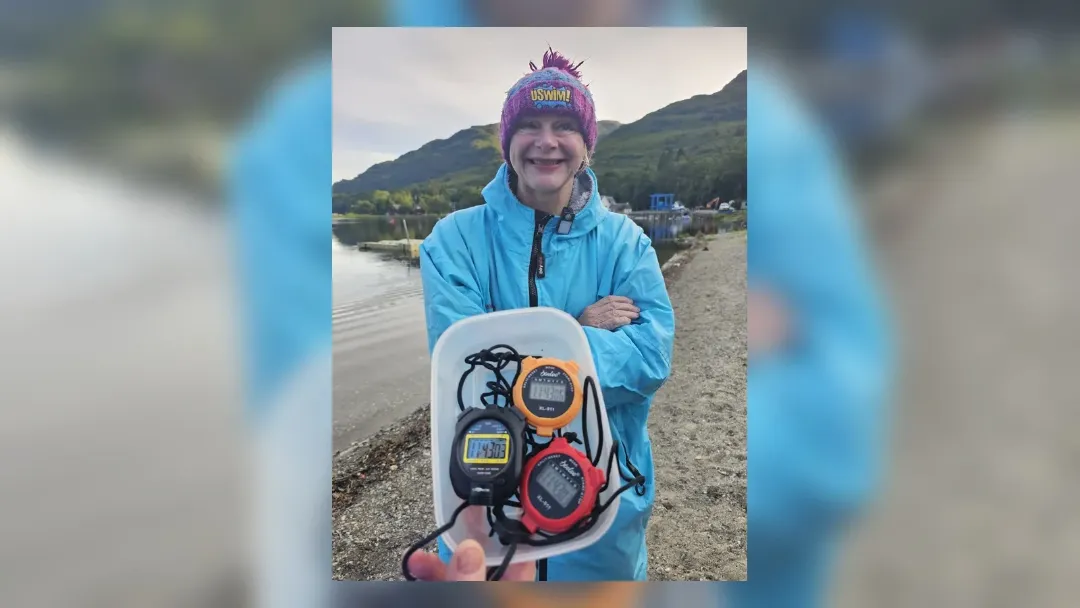
Completed in 11 hours and 43 minutes — another demanding swim successfully finished.
Photo credit: Qswim Adventure
What open water has given her
Behind the swim was not only Helen’s own determination, but also the support of the people around her. She credited her coaches, Karen and Dave Quartermain from Qswim Adventure, for guiding her safely through the islands and contours of the loch, and for supporting her since her early dream of becoming an English Channel swimmer back in 2019.
There were small moments during the swim that stayed with her too. One highlight was seeing her husband get into the water to intercept her at Firkin Point, a narrow part of the loch only about a mile across. Later, a rescue helicopter flew overhead, and safety boats moved quickly across the loch. Thankfully, they were not needed for Helen. If anything, she joked, the person who may have needed help was her husband — he had got into the water to meet her, but had forgotten his prescription goggles.
In endurance swimming, support is not background noise. It is part of the swim itself.
“For all the training and work that goes into being an ultra-marathon swimmer, the support and belief of those around you is instrumental,” she said.
Helen’s story is not only about one lake or one finish time. It is also about what swimming has given her over a lifetime.
Now in her fifties, she is grateful that she can still do what she has always loved. Big swims are difficult to finance and difficult to fit around work and life, but for Helen, the joy of being in the water is enormous.
“I can’t remember a time when swimming wasn’t part of my life,” she said.
Growing up, Helen struggled at school and found it challenging, especially as someone with dyslexia. Finding something she was good at, something she could excel in, helped shape her as a person. She was a competitive swimmer in her youth, and although she later gave up racing to pursue university, a career, and family, she never truly left the water.
Open water brought her back in a new way.
It gave her adventure, community, and the chance to spend time outside in beautiful places. It gave her space to challenge herself, not against other people, but against distance, conditions, and her own doubts.
“Open water swimming has given me so much,” Helen said. “The open water swimming community is truly phenomenal, so supportive and friendly whatever level of experience people have. This sport welcomes any age, shape or colour, as the goal is not about winning but participation.”
That spirit is exactly what SEEN was created to share.
Not only polished race results. Not only perfect moments. But the real stories behind why people enter the water, what they carry with them, what they overcome, and what keeps them coming back.
Helen’s next major challenge is the North Channel in September, crossing the Irish Sea, widely considered one of the toughest and coldest channel swims in the world.
It will be her most ambitious and difficult swim yet.
The rest, as she says, is up to her — and to the conditions nature decides to give.
But if Loch Lomond showed anything, it is that Helen knows how to keep going.
One stroke at a time.
اترك تعليق